
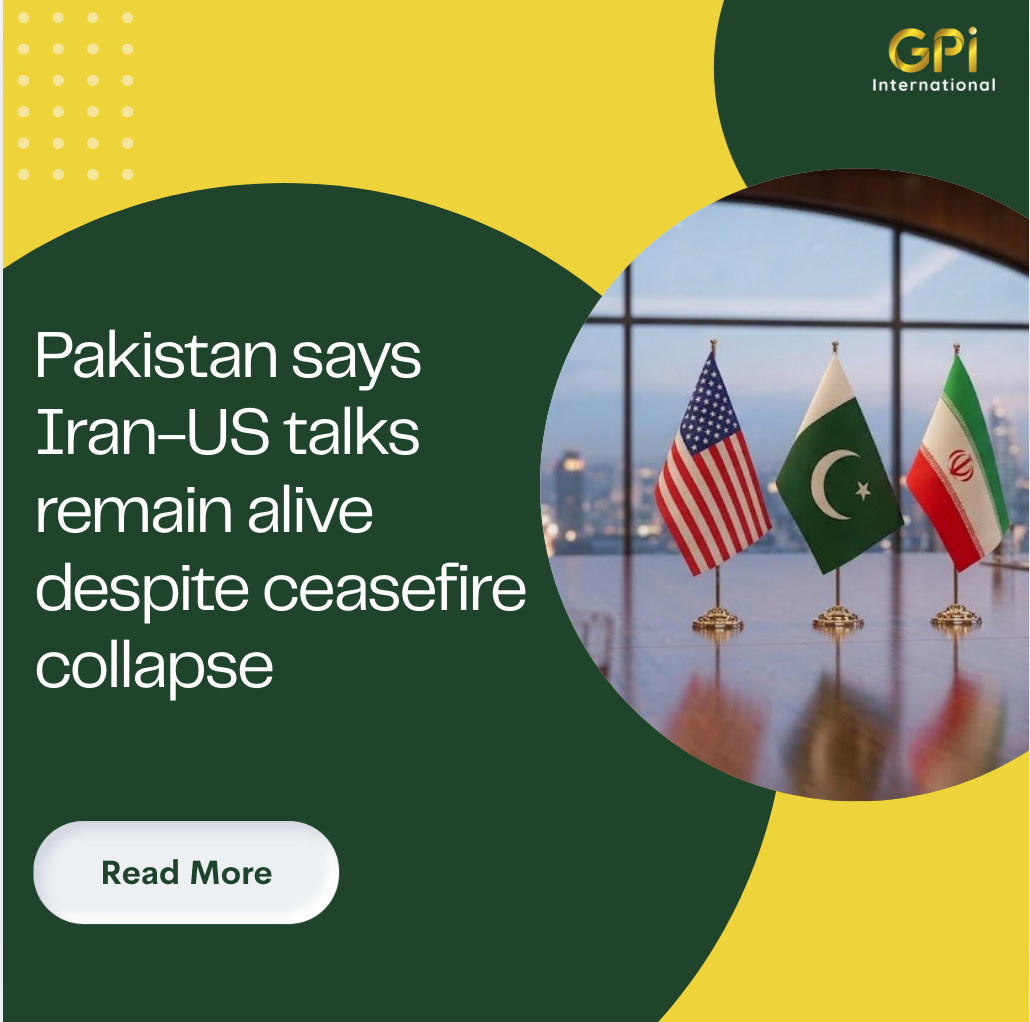
Pakistan says Iran-US talks remain alive despite ceasefire collapse
Pakistan has denied reports that it has abandoned efforts to revive Iran-US negotiations after the ceasefire it helped broker last month broke down.
Foreign Ministry spokesperson Tahir Andrabi said Islamabad remained committed to facilitating dialogue, arguing that both sides would eventually have to resume negotiations despite the latest escalation. While acknowledging that mediation had become more difficult, he said diplomatic efforts had been paused rather than abandoned and could resume once conditions improved.
Senior officials on both sides have also suggested diplomacy remains possible. Speaking on Joe Rogan’s podcast on Wednesday, US Vice President JD Vance said the Trump administration did not intend to rely solely on military action and remained open to a negotiated settlement. He described force as one option available to Washington but stressed that diplomacy remained essential, criticising calls to rule out talks with Tehran altogether.
Regional officials, speaking on condition of anonymity, said mediators from Pakistan, Qatar and Egypt had continued diplomatic contacts aimed at restarting negotiations. They added that neither Washington nor Tehran had formally withdrawn from the original ceasefire framework.
Fighting overshadows diplomatic contacts
Diplomatic efforts have been overtaken by renewed fighting. On Thursday, US forces carried out strikes deeper inside Iranian territory and targeted a vessel accused of attempting to breach the naval blockade of Iranian ports. Tehran responded with missile and drone attacks on US allies across the region and warned it could widen its operations to additional strategic infrastructure.
Naysan Rafati, senior Iran analyst at the International Crisis Group, described the current situation as a critical moment that still leaves room for either renewed diplomacy or further escalation.
Strait of Hormuz remains the main obstacle
Officials involved in the mediation say the central dispute remains control of the Strait of Hormuz, Iran’s principal source of strategic leverage. Tehran insists it has the right to regulate shipping through the waterway, while Washington argues international navigation must remain unrestricted and has explored alternative shipping routes along Oman’s coast.
The 60-day negotiating period agreed in June has effectively stalled after Iran restricted commercial shipping through the strait. The route normally carries around a fifth of global oil supplies, and renewed attacks on shipping have unsettled energy markets while increasing political pressure on the Trump administration ahead of November’s midterm elections.
Asked repeatedly whether negotiations remained possible, President Trump said Iran could still avoid further US military action by returning to talks. Speaking in Pennsylvania on Wednesday, he declined to set a deadline but suggested Tehran already understood the consequences of continued escalation.
Iranian parliament speaker and chief negotiator Mohammad Bagher Qalibaf said Tehran did not consider last month’s agreement void but warned that its commitment depended on Washington honouring its own obligations. He also stressed that Iran was not seeking a permanent closure of the Strait of Hormuz, but rather to maintain its authority over navigation while allowing commercial shipping to continue under its regulations.
Analysts doubt military pressure alone will succeed
The United States has expanded air strikes and reinforced its naval blockade in an effort to deter further attacks on commercial shipping. However, defence analysts question whether military and economic pressure alone will force Tehran back to negotiations.
Bradley Bowman, of the Foundation for Defense of Democracies, said Iran did not need to disrupt shipping frequently to create significant economic uncertainty. Even limited attacks, he argued, were enough to raise insurance costs, reduce traffic through the strait and increase political pressure on Washington.
Mark Cancian, senior adviser at the Center for Strategic and International Studies, was similarly sceptical, arguing there was little evidence that measures which had failed to change Iranian behaviour in the past would produce different results now.